Why Group Riding Etiquette Matters
Motorcycle trips become even more enjoyable when shared with friends or fellow riders. Group rides bring together people who share the same passion for the road, adventure, and exploration. However, riding in a group also requires coordination, discipline, and mutual respect.
Unlike solo riding, group riding involves multiple motorcycles traveling together on the same route. Without proper etiquette and communication, group rides can quickly become chaotic and unsafe.
Good group riding etiquette ensures that everyone rides safely, maintains proper spacing, and understands their role in the group. It also helps prevent confusion, reduces risks on the road, and makes the journey smoother for everyone involved.
Whether you are joining a small ride with friends or a large organized motorcycle trip, understanding group riding etiquette is an essential part of responsible riding.
Attend the Pre-Ride Briefing
Before starting a group ride, many organizers conduct a short briefing to explain the route, stops, riding order, and safety guidelines. Paying attention during this briefing helps ensure that every rider understands the plan for the journey.
- Listen carefully to the ride leader’s instructions
- Understand the planned route and rest stops
- Clarify hand signals or communication methods
- Confirm emergency contact procedures
- Ask questions if anything is unclear
A few minutes of preparation before the ride can prevent confusion and help the group stay organized throughout the trip.
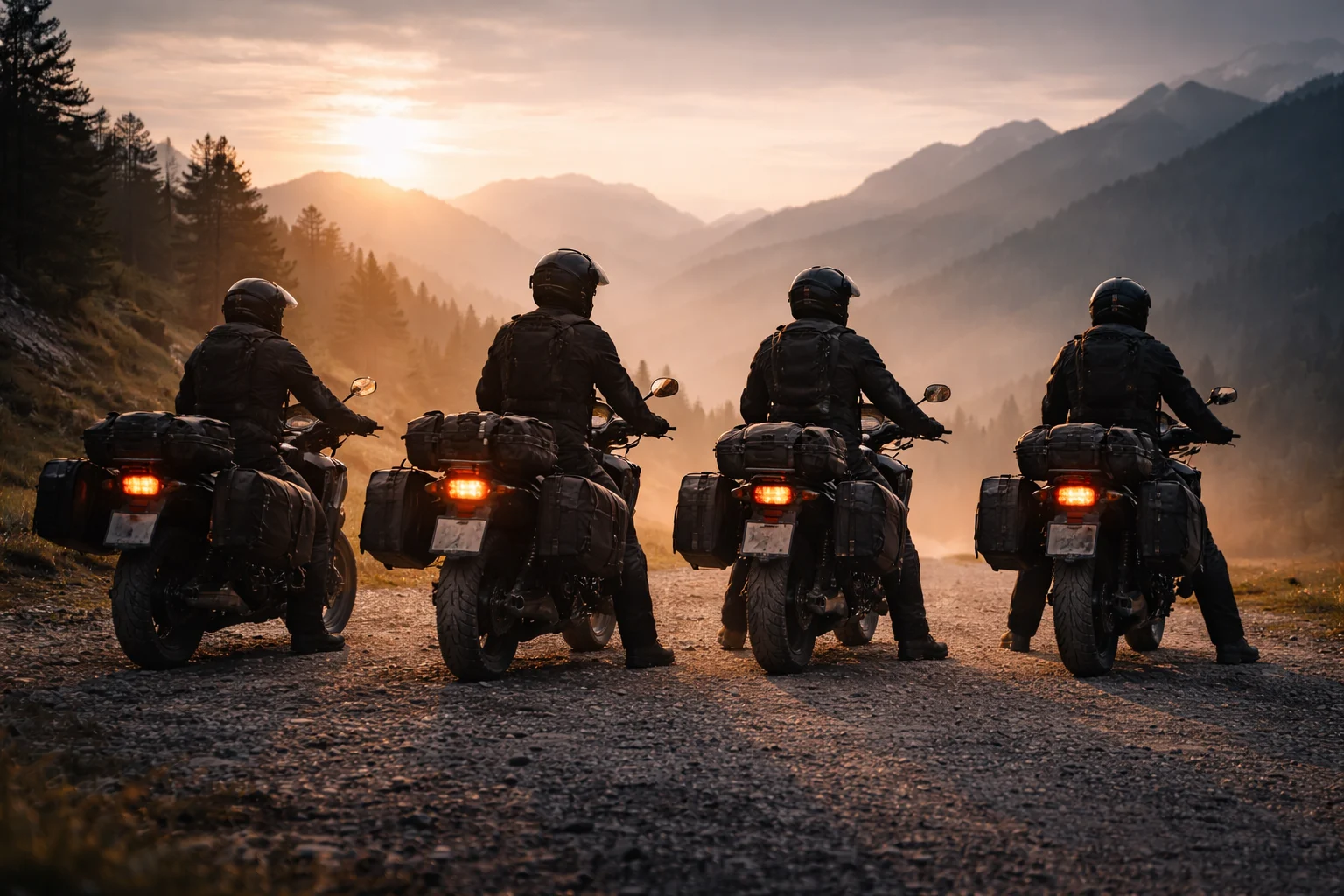
Clear communication and coordination are essential for safe group rides.
Maintain Proper Riding Formation
One of the most common formations used during group rides is the staggered formation. In this formation, riders position themselves alternately within the lane to maintain safe spacing while allowing enough room to react to road conditions.
The lead rider usually stays toward the left side of the lane, while the second rider positions slightly behind on the right side. This pattern continues for the rest of the group.
Maintaining proper formation helps improve visibility and ensures that riders have enough space to maneuver safely.
On narrow or winding roads, riders may switch to a single-file formation to maintain better control and safety.
Keep a Safe Following Distance
Maintaining adequate distance between motorcycles is crucial during group rides. Riding too close to another rider reduces reaction time and increases the risk of accidents.
Even when riding in formation, each rider should maintain enough space to stop or adjust speed safely.
Road conditions, traffic, and weather can all affect stopping distance, so riders should always remain alert and adjust spacing accordingly.
A comfortable following distance ensures that everyone in the group has enough time to react to sudden obstacles or changes in speed.
Avoid Sudden or Unpredictable Movements
Smooth and predictable riding is one of the most important principles of group riding etiquette. Sudden braking, abrupt lane changes, or aggressive acceleration can create confusion for riders behind you.
When riding in a group, always try to maintain steady speeds and signal your intentions clearly before making any changes.
Using indicators early and braking gradually helps the riders behind you anticipate your actions and adjust accordingly.
Predictable riding improves safety and keeps the group moving smoothly.
Respect the Ride Leader and Sweep Rider
Most organized group rides have a designated ride leader at the front and a sweep rider at the back. The ride leader navigates the route and sets the pace for the group, while the sweep rider ensures that no one gets left behind.
Riders should avoid overtaking the ride leader unless instructed to do so. Maintaining the planned order helps keep the group organized and prevents confusion on the road.
If you experience mechanical issues or need to stop, signaling the sweep rider allows the group to manage the situation safely.
Respecting these roles helps maintain structure and coordination during group rides.
Ride Within Your Comfort Zone
One of the most important rules of group riding is to never push beyond your comfort level. Every rider has a different level of experience and skill, and trying to keep up with faster riders can be dangerous.
Focus on maintaining a safe and comfortable pace rather than competing with others in the group. If the group spreads out, the ride leader will usually regroup at designated stops.
Safe riding should always take priority over speed or group positioning.
Riding confidently within your limits ensures that you stay safe and enjoy the journey.
Communicate With Hand Signals
Communication plays a vital role in group riding. Since engine noise and distance may make verbal communication difficult, riders often rely on hand signals to communicate with others in the group.
Common signals include indicating turns, pointing out obstacles on the road, signaling fuel stops, or notifying the group to slow down.
Passing these signals along the group ensures that every rider remains informed about road conditions or changes in direction.
Clear communication helps maintain safety and coordination throughout the ride.
Mototrek Tip
Group rides are about enjoying the journey together. Ride responsibly, respect other riders, and prioritize safety over speed. A disciplined group ride creates a smoother and more enjoyable experience for everyone.