Why Descending Can Be More Challenging Than Climbing
Many beginner trekkers assume that the hardest part of a trek is climbing uphill. While ascents require stamina and strength, descending steep trails can actually be more challenging for the body if done incorrectly.
When walking downhill, gravity pulls your body forward and places extra pressure on your knees, ankles, and leg muscles. If you move too quickly or lose balance, it becomes easier to slip on loose soil, rocks, or wet surfaces.
This is why experienced trekkers often say that the descent is where most injuries occur during a trek. The good news is that by using proper techniques and maintaining awareness on the trail, descending steep paths can become much safer and more comfortable.
Learning the right downhill trekking habits not only protects your joints but also helps conserve energy so you can finish the trek safely and confidently.
Slow Down and Maintain Control
One of the most common mistakes trekkers make while descending is moving too fast. It may feel natural to walk quickly downhill, but rushing increases the risk of slipping and losing balance.
- Take controlled and steady steps
- Avoid jumping or skipping sections of the trail
- Keep your pace comfortable and balanced
- Allow enough space between you and other trekkers
Maintaining a slower pace allows your body to stay balanced and gives you more time to react to uneven terrain. It also helps reduce strain on your knees during long descents.
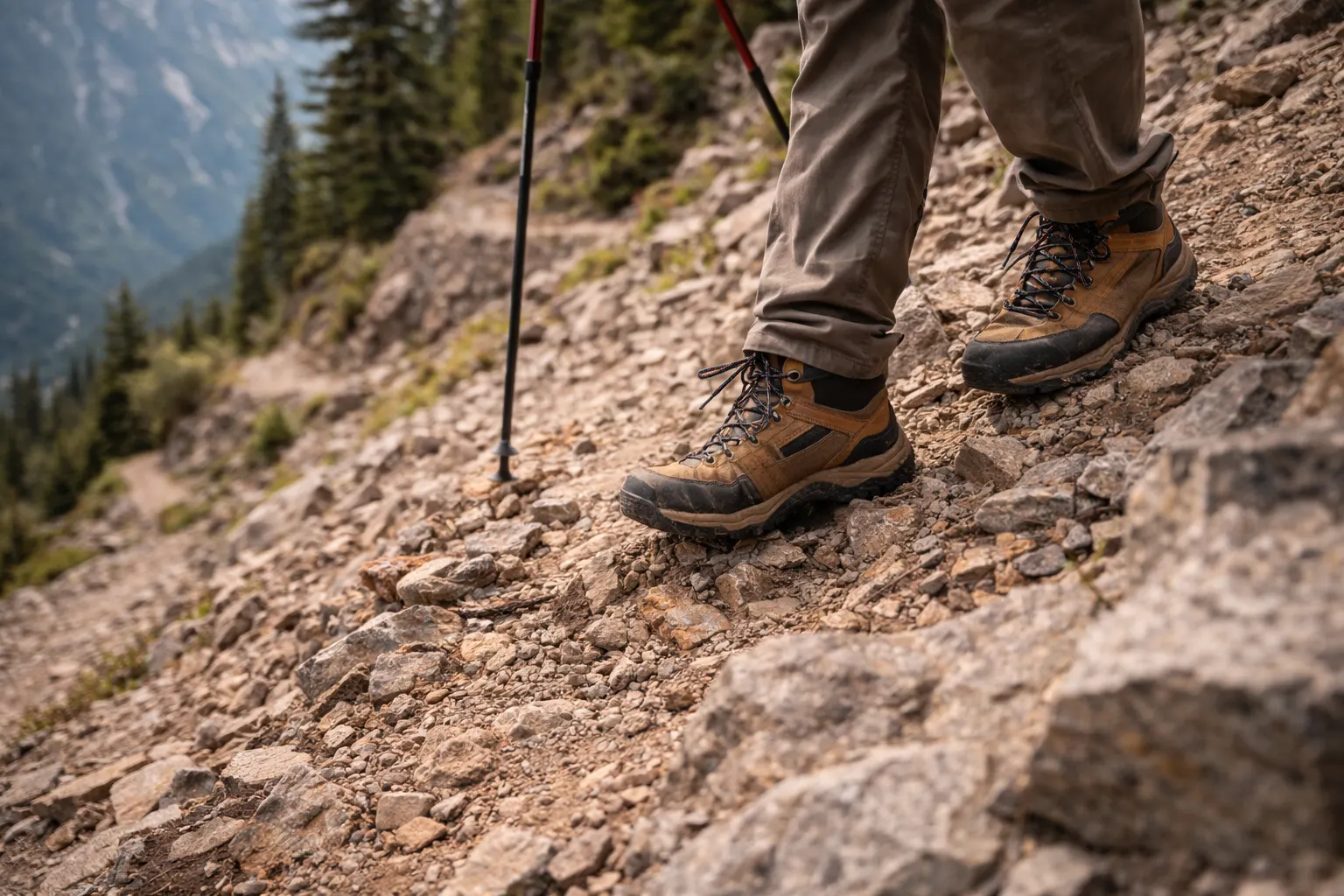
Controlled steps and proper balance are essential when descending steep trails.
Use Short and Stable Steps
When walking downhill, long strides can make it harder to control your balance. Instead, shorter steps help maintain stability and reduce the impact on your joints.
Placing your feet carefully on stable surfaces gives you better control over your movement. If the trail is rocky or uneven, take extra time to choose secure footholds before stepping forward.
Keeping your knees slightly bent also helps absorb shock while descending. This technique reduces pressure on your joints and allows your muscles to handle the impact more smoothly.
Small, steady steps may feel slower, but they make the descent far safer and less tiring.
Lean Slightly Forward for Better Balance
Body posture plays an important role when descending steep trails. Many beginners instinctively lean backward while walking downhill, which can actually make balancing more difficult.
Instead, try leaning slightly forward while keeping your center of gravity balanced over your feet. This posture helps you stay stable and prevents unnecessary strain on your lower back.
Your arms can also help maintain balance. Keeping them slightly out to the sides allows you to stabilize yourself if the trail becomes uneven or slippery.
A balanced posture helps you stay in control while walking downhill, especially on steep or loose terrain.
Use Trekking Poles if Available
Trekking poles can be extremely helpful when descending steep trails. They provide additional points of contact with the ground, improving balance and stability on uneven terrain.
By placing trekking poles slightly ahead of you during downhill sections, some of the body weight is transferred from your knees to your arms. This reduces the impact on your joints and helps maintain control during steep descents.
Many experienced trekkers rely on trekking poles during long mountain descents because they help prevent fatigue and improve overall balance.
While trekking poles are not mandatory for every trek, they can be especially useful on rocky, muddy, or slippery trails.
Watch Out for Loose Rocks and Slippery Surfaces
Trail conditions can vary greatly depending on weather and terrain. Loose rocks, gravel, wet soil, and moss-covered surfaces can all increase the risk of slipping while descending.
Always pay attention to the ground ahead of you and choose stable spots for each step. If the trail becomes particularly slippery, move slowly and test the surface with your foot before shifting your weight.
During rainy or muddy conditions, trekking shoes with good grip become especially important. Proper footwear can provide better traction and help maintain stability on challenging sections of the trail.
Staying alert and aware of your surroundings greatly reduces the risk of accidents during the descent.
Take Breaks to Protect Your Knees
Descending long trails can place continuous pressure on the knees and leg muscles. Taking short breaks during the descent allows your body to recover and prevents unnecessary strain.
During breaks, stretch your legs gently and hydrate to maintain energy levels. Resting periodically helps your muscles recover and improves overall endurance during the trek.
Listening to your body is an important part of trekking safety. If you feel discomfort in your knees or legs, slowing down and taking a break can prevent more serious injuries.
Proper pacing combined with short recovery breaks helps make long descents far more manageable.
Mototrek Tip
Descending safely is just as important as climbing successfully. Take controlled steps, stay balanced, and never rush downhill sections. Protecting your knees and maintaining stability will help you complete the trek safely.