Why Walking Technique Matters in Trekking
Trekking might seem like a simple activity — just walking through nature. But the way you walk during a trek can greatly affect how much energy you use and how comfortable you feel throughout the journey.
Many beginners start a trek with excitement and walk too fast, only to feel tired within the first hour. Efficient trekking is not about speed; it’s about maintaining a steady rhythm that allows you to walk longer distances without exhausting yourself.
Experienced trekkers know that proper walking technique helps conserve energy, reduce strain on muscles, and make long treks much more enjoyable.
Learning how to walk efficiently on a trek can help you stay comfortable, maintain stamina, and enjoy the trail from start to finish.
Maintain a Steady Pace
One of the most important principles of trekking is maintaining a steady and comfortable pace. Starting too fast can quickly drain your energy and make the rest of the trek more difficult.
- Begin the trek slowly and allow your body to warm up
- Maintain a consistent rhythm while walking
- Avoid rushing uphill sections
- Walk at a pace where you can still breathe comfortably
A steady pace helps your body use energy efficiently and allows you to continue walking for longer periods without feeling exhausted.
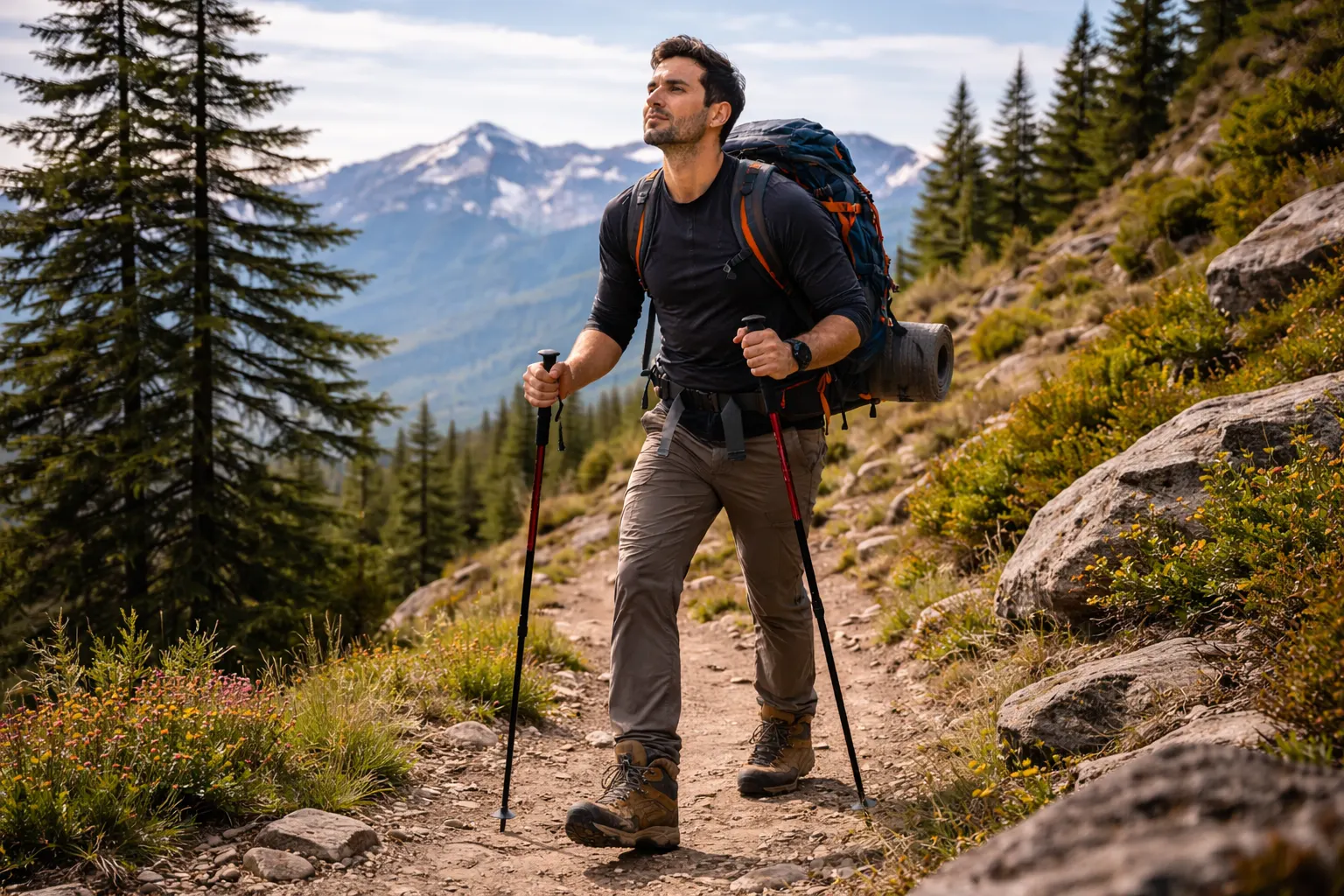
Maintaining a steady pace helps conserve energy during long treks.
Use Short and Controlled Steps
Taking shorter and controlled steps is often more efficient than taking long strides while trekking. Short steps help maintain balance and reduce strain on your legs, especially on steep climbs.
When walking uphill, lean slightly forward and take small steps while maintaining a steady rhythm. This technique helps your body conserve energy and prevents rapid fatigue.
On downhill sections, keep your steps controlled and avoid rushing. Moving too quickly downhill can put unnecessary pressure on your knees and increase the risk of slipping.
Control Your Breathing
Breathing plays an important role in maintaining stamina during trekking. When climbing steep trails, many trekkers unconsciously hold their breath or breathe irregularly, which can lead to faster fatigue.
Try to maintain a steady breathing rhythm while walking. Inhale deeply through your nose and exhale steadily as you move. Some trekkers find it helpful to match their breathing with their steps.
Controlled breathing helps your muscles receive more oxygen and keeps your body energized during long climbs.
Take Smart Breaks
Taking breaks during a trek is important, but timing them properly can help maintain your energy levels. Instead of waiting until you are completely exhausted, it is better to take short breaks at regular intervals.
Many trekkers follow a simple rhythm: walking for about 30–40 minutes and then taking a short break to hydrate and relax. This approach allows your muscles to recover while keeping your body warmed up for continued movement.
During breaks, drink water, stretch lightly, and enjoy the surroundings. Avoid sitting for too long, as it may make restarting the trek feel more difficult.
Balanced pacing combined with well-timed breaks helps make long treks feel much easier.
Mototrek Tip
The secret to efficient trekking is patience. Walk at a comfortable pace, breathe steadily, and listen to your body. Trekking is not about reaching the destination quickly — it’s about enjoying every step of the journey.